Home › Treatments · 09
Microneedling
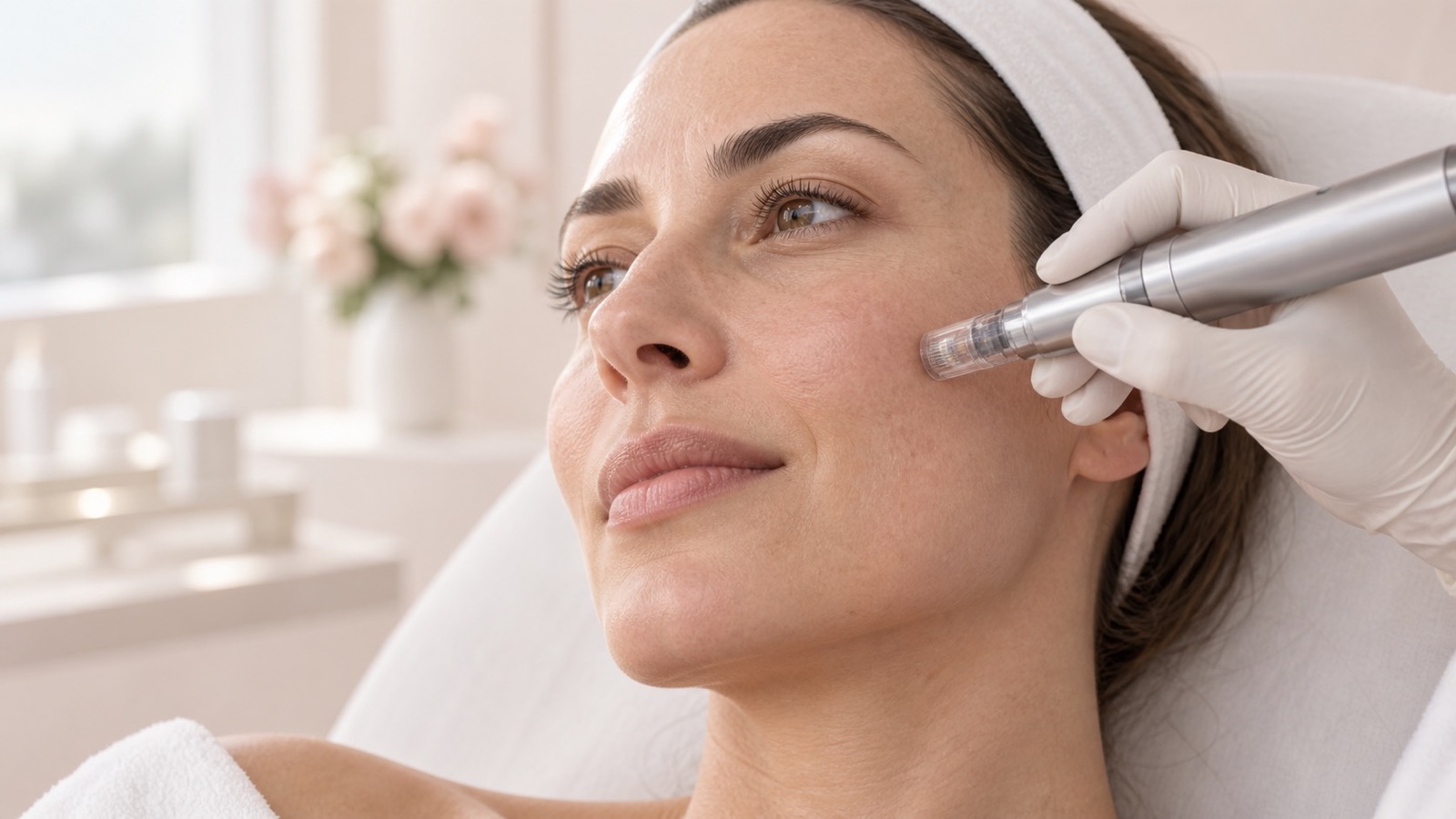
A hand-held microneedling device creates tiny, temporary channels in the skin to stimulate its repair process. Treatment focuses on skin quality, texture and radiance without changing your facial shape.
Forty to sixty minutes, anaesthetic and treatment together
Usually three, four to six weeks apart
In the months with less sun exposure
What it is
With a hand-held microneedle device I create temporary microchannels in the skin, which close again within a few hours. These channels stimulate the skin’s repair process. The aim is to improve skin quality rather than add volume.
It is not a radiofrequency treatment, nor a laser one: the only stimulus is mechanical, and I set the depth myself according to the area and to your skin.
Exosomes are applied to the skin immediately after microneedling, while the microchannels are still open: they sit on the skin, they are not injected. On intact skin they penetrate very little, which is why that is the moment for them.
Whether it is suitable for you, whether a single session is enough or a course is needed, and at what depth to work: we decide at the consultation, after taking your medical history.
Who it is for
- Uneven texture, enlarged pores
- Dull skin, without radiance
- Superficial acne scarring, once the acne itself is no longer active
- Skin that has suffered from the summer sun
- Improving the quality of the skin without changing the shape of the face
What happens during treatment
The consultation comes first: I look at your skin, take your medical history and tell you whether microneedling is suitable for you. Then we plan the course.
On the day of the session I cleanse the skin and apply an anaesthetic cream, which I leave to take effect. Then I pass the hand-held microneedle device over the face in a controlled pattern: over the whole face or over specific areas, at a depth that changes with the area — shallower around the eyes and on the forehead, deeper on the cheeks and chin.
Immediately afterwards I apply the chosen product to the skin, while the microchannels are still open, and finish with sun protection. Anaesthetic and treatment together, forty to sixty minutes.
The course: usually three sessions four to six weeks apart, then maintenance once or twice a year. The number of sessions depends on the aim and how your skin responds: I prefer to tell you that beforehand.
How long the effect lasts
Changes in skin quality develop gradually and are assessed at the end of the course, rather than after the first session.
How long the effect lasts depends on your skin, age, sun exposure and skincare at home. Maintenance is usually planned once or twice a year. I do not promise you a result: at the consultation I tell you what you can reasonably expect.
Comfort and recovery
During the session. With the anaesthetic cream you generally feel discomfort rather than pain; the forehead and the area around the eyes are the most sensitive.
Afterwards. Redness and tightness, similar to mild sunburn, are expected for one to three days. Light flaking may follow.
Aftercare:
- SPF 50+ sunscreen every day, reapplied, even on cloudy days
- No make-up for twenty-four hours
- Do not touch, do not rub, do not use scrubs
- No sauna, swimming pool or strenuous exercise for forty-eight hours
- Acids and retinoids paused for a few days; you go back to them when I tell you
- Only the products I recommend, until the skin is back to normal
Combining treatments
Microneedling works on the quality of the skin: it fits with the other treatments, and I set the intervals.
- 01 Chemical peel The peel renews the surface, while microneedling works in the dermis beneath it. Never on the same day: I alternate them at least four weeks apart.
- 02 Biorevitalisation Hydration with non-cross-linked hyaluronic acid, in separate sessions, within the same plan.
- 03 Mesotherapy Superficial microinjections of active substances into the dermis: another route to the same aim, in separate sessions.
- 04 Biostimulators Biostimulators work deeper to support the skin over time. Microneedling focuses on its surface and texture.
Planning the course I generally start courses from October and continue through the months with less sun exposure. Daily sun protection remains essential.
Cost
I tell you the price for your treatment at the first consultation, before we begin. It depends on the area to be treated and on how many sessions are needed.
Frequently asked questions
Does it hurt?
It is done with an anaesthetic cream that I leave to take effect before starting: generally you feel discomfort rather than pain. The forehead and the area around the eyes are the most sensitive. If at any point it is too much, you tell me and I stop.
How many sessions are needed?
Usually three, four to six weeks apart. We agree the exact number at your consultation, based on your skin. The number of sessions depends on the aim and how your skin responds.
How long will the redness last?
One to three days of redness, as after mild sunburn, sometimes with light flaking over the days that follow. Make-up can go back on after twenty-four hours.
What are exosomes?
A product I apply to the skin immediately after the microneedling, while the microchannels are still open. It sits on the skin: I do not inject it. I explain at your consultation whether it is suitable for you.
Can I have treatment in summer?
I recommend avoiding summer treatment. You need to avoid sun exposure in the weeks afterwards and use sun protection. That is why I schedule the courses for the months with less sun exposure.
Booking an appointment
At the consultation I look at your skin, take your medical history and tell you whether microneedling is suitable for you, over how many sessions and at what depth.
Tell me what you'd like to improveI reply personally with information about your first consultation.
